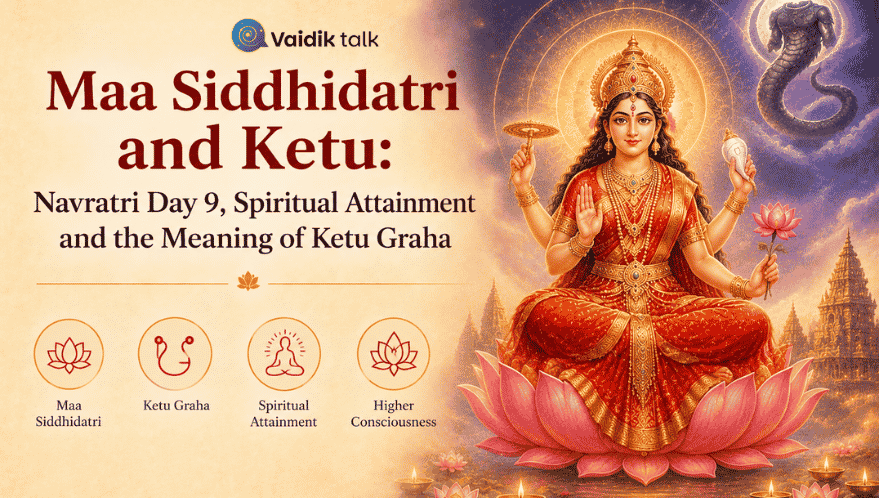
Navratri Day 9 is devoted to Maa Siddhidatri, the ninth and final form of Navadurga. She is revered as the giver of siddhis, which are traditionally understood as spiritual attainments, higher insight and inner fulfilment. Her worship brings the nine-day observance toward a reflective close, inviting devotees to seek wisdom beyond material desires.
The Navratri’s meaning along with nine nights of Maa Durga and their spiritual importance present a progression from grounding and discipline to courage, wisdom, purification and spiritual awareness. Maa Siddhidatri represents this final movement toward completeness, faith and self-knowledge.
Maa Siddhidatri is symbolically connected with Ketu Graha, the lunar node associated in Jyotish with detachment, intuition, spiritual inquiry, past impressions and sudden inner shifts. Ketu can point a person away from surface-level attachments and toward questions of purpose. Maa Siddhidatri’s divine grace offers a devotional path for turning that search into clarity and meaningful conduct.
Who Is Maa Siddhidatri?
The name Siddhidatri means “giver of siddhis.” In devotional tradition, siddhis can refer to special spiritual abilities, yet their deeper meaning is inner mastery. A devotee may understand spiritual attainment as greater self-control, humility, discernment, faith and peace of mind.
Maa Siddhidatri is commonly depicted seated on a lotus. She is shown with four arms, holding a chakra, shankha, gada and lotus. These symbols are associated with divine order, sacred sound, strength and spiritual awakening. Her serene form expresses the idea that real power does not need outward display.
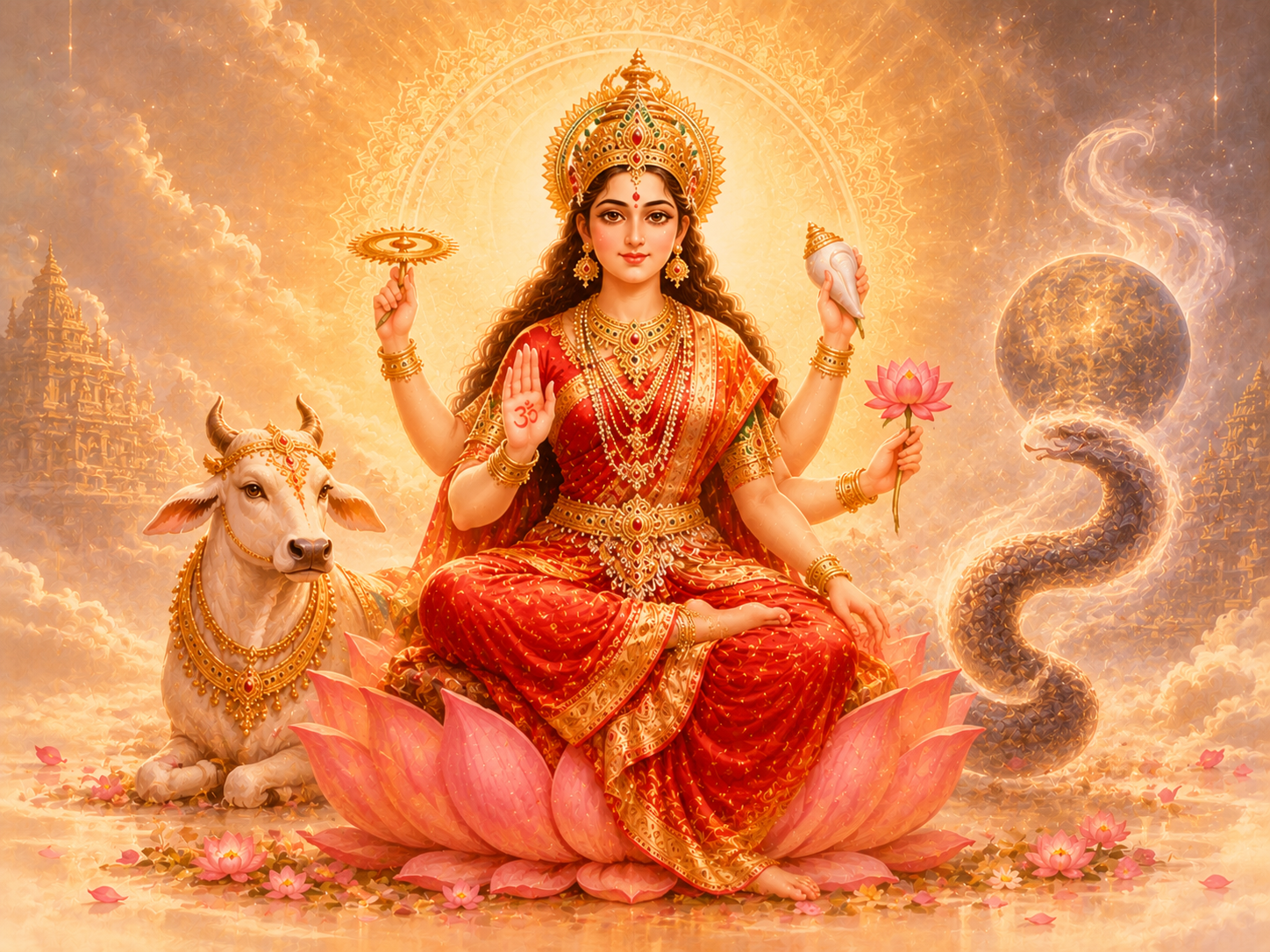
Traditional narratives describe Maa Siddhidatri as the form of the Divine Mother who bestowed siddhis upon Lord Shiva. This form also represents the completeness of Shakti. In worship, Maa Siddhidatri reminds devotees that spiritual growth comes through devotion, ethical conduct, patient practice and respect for higher wisdom.
Navratri begins with emotional grounding through Maa Shailputri and Chandra Graha. It continues with disciplined courage in Maa Brahmacharini and Mangal Graha, followed by the harmony of Maa Chandraghanta and Shukra Graha. On Day 9, Maa Siddhidatri brings these qualities together through wisdom and inner stillness.
Maa Siddhidatri and Ketu Graha
Ketu is one of the nine grahas in Jyotish, though it is not a physical planet. Astronomically, Ketu corresponds to the Moon’s descending node, the point where the Moon’s orbital path crosses the apparent path of the Sun. The opposite point is Rahu, the ascending node. Solar and lunar eclipses occur when the Sun, Earth and Moon align near these nodes. NASA’s eclipse resources explain the geometry behind eclipses and the role of the Moon’s orbit.
In Vedic astrology, Ketu is associated with detachment, introspection, sudden changes, spiritual inclination, research, solitude and past experiences. Its effects depend on the full Kundli, including its sign, house, conjunctions, aspects and dasha period. Ketu is not a simple indicator of loss or misfortune.
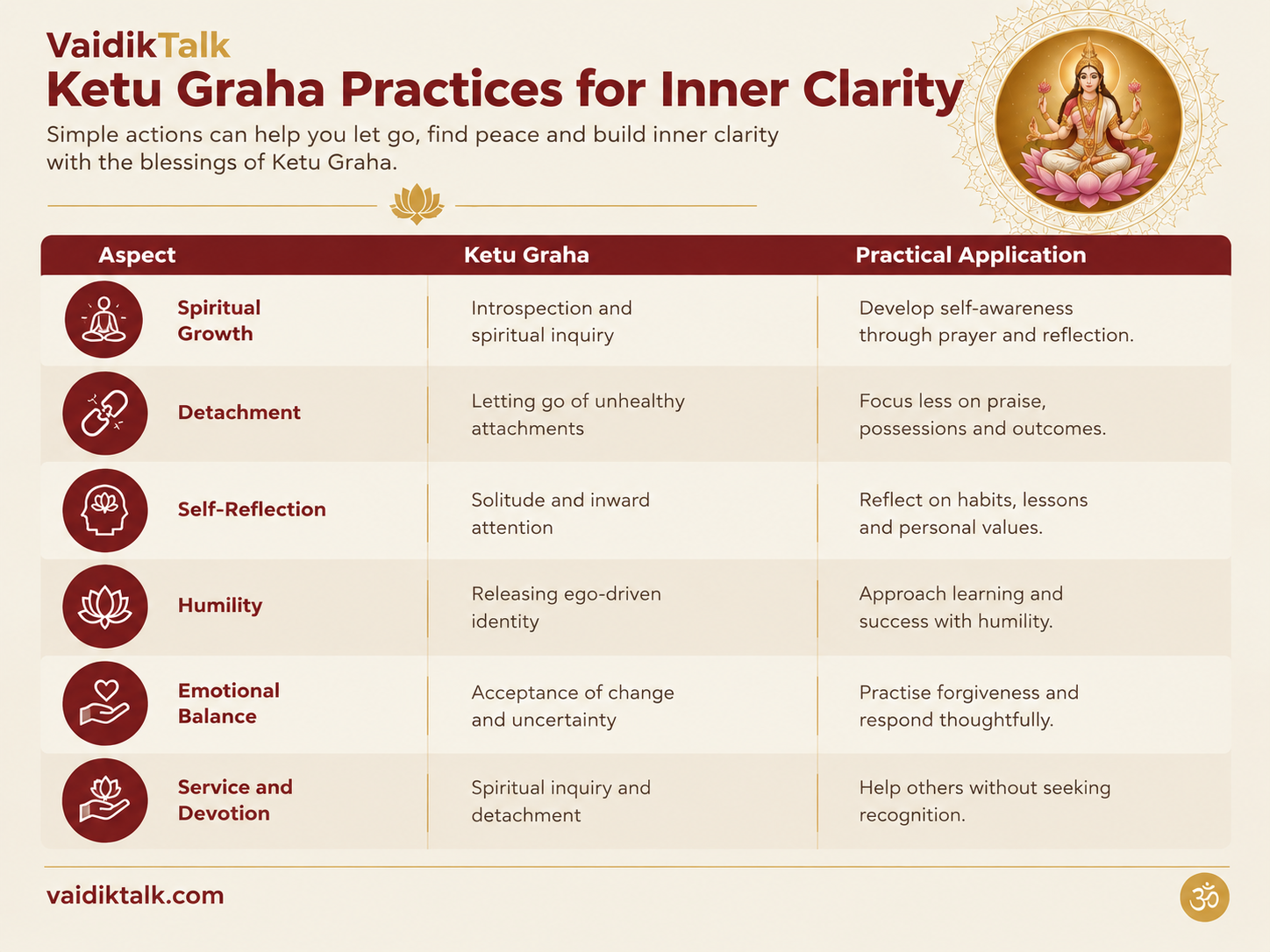
The symbolic relationship between Maa Siddhidatri and Ketu Graha lies in detachment with understanding. Ketu may encourage a person to question external labels, possessions or approval. Maa Siddhidatri represents the inner wisdom that helps a person use this questioning for spiritual maturity rather than confusion.
People at the same time are also interested in exploring what Is Vedic Astrology along with grahas, houses, birth-chart interpretation and much more. A detailed Kundli reading considers the chart as a whole, rather than treating one graha as the complete explanation for life events.
Spiritual Attainment Beyond Achievement
Maa Siddhidatri’s teaching is often misunderstood as a promise of extraordinary powers. In everyday life, spiritual attainment may be seen through small but meaningful changes: a calmer response during conflict, a more honest decision, the ability to forgive or the discipline to stay connected with prayer.
Detachment and Responsibility
Ketu Graha is traditionally linked with detachment. Detachment does not mean neglecting family, work or personal duties. It means reducing unhealthy dependence on outcomes, praise or possessions. A person can work sincerely while accepting that every result is not fully within personal control.
Maa Siddhidatri’s form supports this balanced view. She encourages a devotee to remain involved in life with compassion, while keeping inner peace separate from temporary success or disappointment.
Silence and Self-Reflection
Ketu is associated with inward attention. Navratri Day 9 can be a meaningful time to reduce unnecessary distractions and reflect quietly. A person may write down one lesson learned during the nine days, one habit that needs improvement and one value that deserves greater attention.
This inner practice complements the strength developed through Maa Kushmanda and Surya Graha. It also supports the wise communication associated with Maa Skandamata and Budh Graha.
Humility as Wisdom
Spiritual understanding grows when a person recognises that learning has no final endpoint. Maa Siddhidatri’s grace can inspire humility in knowledge, success and devotion. A person may have skills, resources or recognition, yet humility gives those gifts a positive direction.
Ketu Graha symbolically asks a person to let go of ego-driven identity. Maa Siddhidatri encourages the devotee to fill that space with prayer, service and deeper self-awareness.
Navratri Day 9 Puja Vidhi
The Navratri Day 9 puja vidhi differs across households, regions and temple traditions. Families may follow local customs, while devotion, cleanliness and gratitude remain at the heart of worship.
Prepare the Puja Space
Devotees may bathe and wear clean clothes before beginning the Navratri Day 9 puja vidhi. An image or murti of Maa Siddhidatri can be placed on a clean altar, along with a diya, incense, flowers, kumkum, akshat, water, fruits and sweets.
Purple is commonly associated with Maa Siddhidatri in many Navratri colour traditions. It can represent dignity, spiritual reflection and inner peace. Devotees may wear purple clothing or offer suitable flowers according to their household practice.
Offer Bhog and Prayer
Sesame seeds, fruits, sweets and satvik food are offered in several Day 9 traditions. Some families offer kheer, halwa or seasonal fruits. The bhog may be prepared with cleanliness and shared as prasad after aarti.
Many households perform Kanya Puja on Ashtami or Navami. Young girls are welcomed as expressions of divine feminine energy, offered food and treated with respect. The timing and form of this observance vary by region and family custom.
Recite the Maa Siddhidatri Mantra
A commonly recited Maa Siddhidatri mantra is:
Om Devi Siddhidatryai Namah
The Maa Siddhidatri mantra can be chanted with attention to humility, wisdom and spiritual steadiness. Some devotees use a mala for 108 repetitions, while others follow a count taught by elders or a spiritual teacher.
A traditional verse associated with Maa Siddhidatri is:
Siddha Gandharva Yagyadhair Asurair Amarairapi
Sevyamana Sada Bhuyat Siddhida Siddhidayini
The Navratri Day 9 puja vidhi can close with aarti, gratitude and the sharing of prasad among family members, neighbours and guests.
Ketu Graha Practices for Inner Clarity
Devotees may use the final day of Navratri to reflect on Ketu Graha through calm, grounded actions.
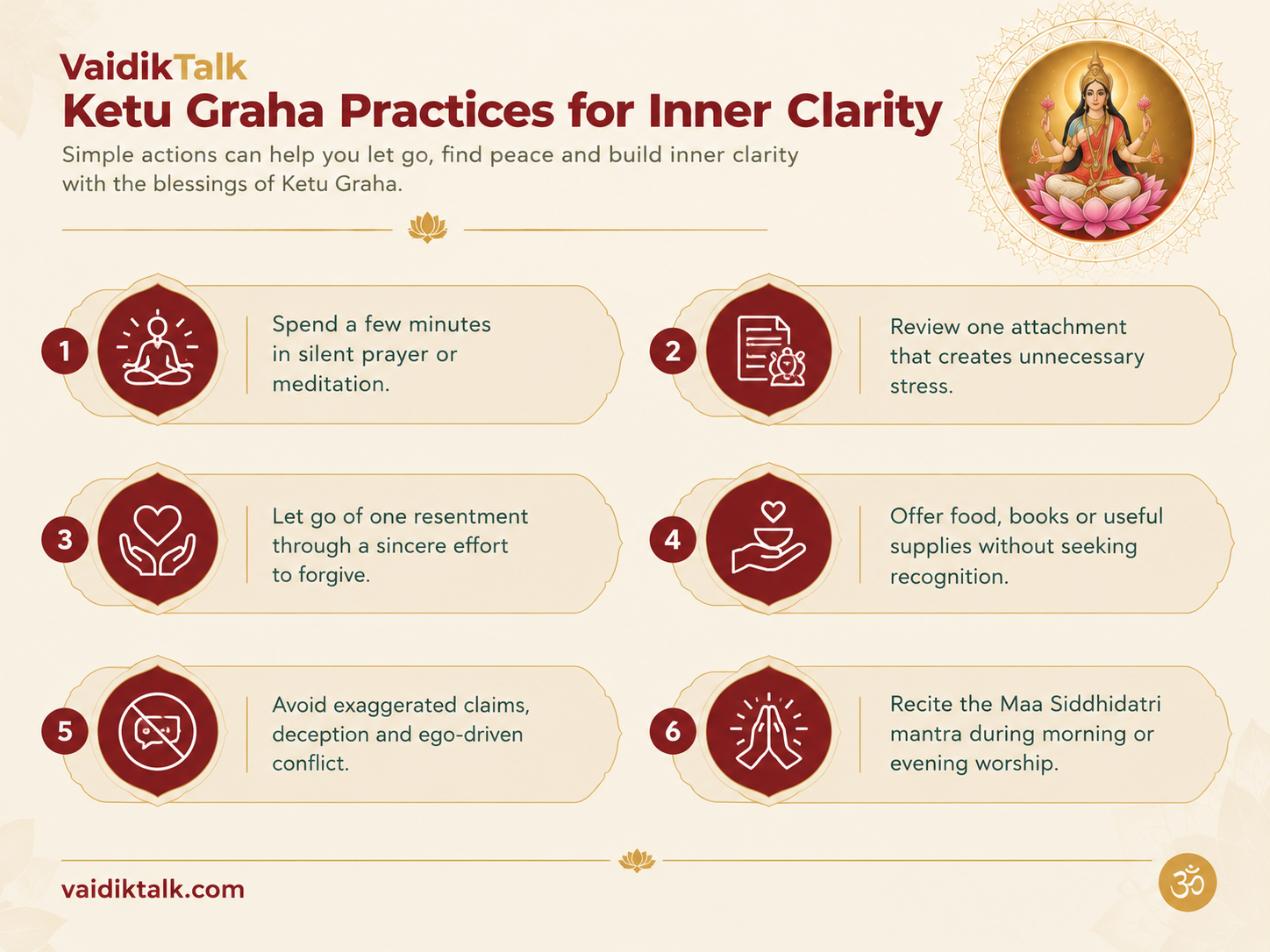
- Spend a few minutes in silent prayer or meditation.
- Review one attachment that creates unnecessary stress.
- Let go of one resentment through a sincere effort to forgive.
- Offer food, books or useful supplies without seeking recognition.
- Avoid exaggerated claims, deception and ego-driven conflict.
- Recite the Maa Siddhidatri mantra during morning or evening worship.
Some traditions associate Ketu with flag-shaped symbols, smoky tones and acts of quiet charity. Such practices can be used as faith-based reminders for humility and clarity, rather than promises of a particular outcome.
For devotees who prefer a regular chanting routine, Rudraksha malas and prayer accessories from VaidikTalk Store can offer a simple focus for daily mantra practice. The value of a spiritual item grows through consistent prayer, reflection and ethical conduct.
The Final Lesson of Navratri
The nine forms of Navadurga represent more than nine separate rituals. They can be understood as nine values that support a more mindful life. Maa Shailputri offers stability. Maa Brahmacharini teaches discipline. Maa Chandraghanta represents courageous balance. Maa Kushmanda reflects vitality. Maa Skandamata represents wise care.
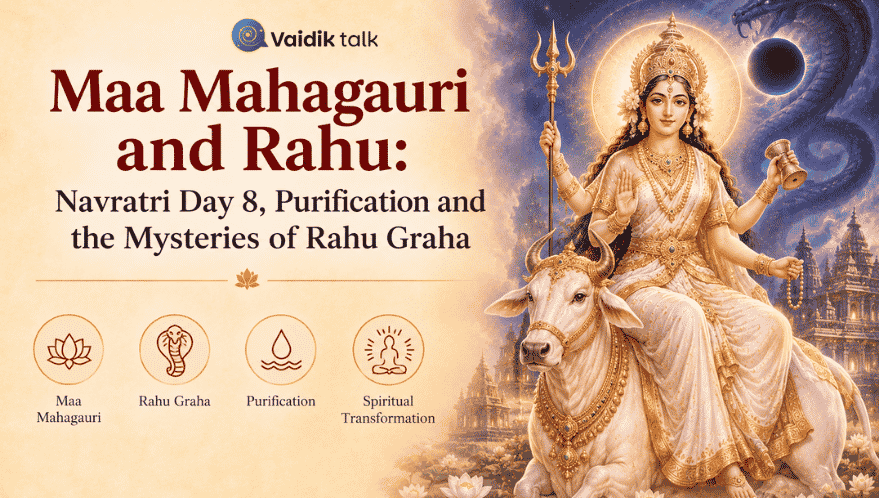
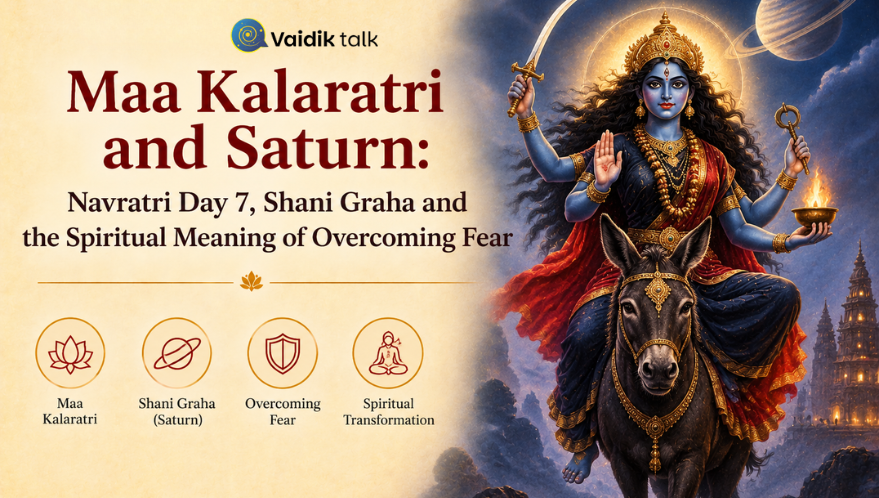
Maa Katyayani inspires ethical strength, while Maa Kalaratri and Saturn teach courage in difficult times. Her connection with Shani Graha reminds devotees that fear can be faced through discipline, patience and inner strength. Maa Mahagauri and Rahu represent purification and clarity. Her association with Rahu Graha highlights the importance of releasing confusion, illusions and inner restlessness before seeking spiritual wisdom. Maa Siddhidatri brings these lessons toward spiritual maturity, where a devotee learns to seek purpose beyond fear, approval and temporary gains.
Ketu Graha fits this final teaching because it symbolically turns attention inward. It asks what remains when pride, comparison and attachment begin to loosen. Maa Siddhidatri answers this question through devotion, knowledge, humility and service.
Seek Personalised Guidance
Maa Siddhidatri and Ketu Graha offer a meaningful Navratri Day 9 message: true attainment is reflected in calmness, humility and wise action. A complete Kundli can offer personal context for Ketu Graha, spiritual interests, career changes, relationships and life direction.
For individual guidance on Ketu Graha, a Kundli or Navratri worship, devotees may contact VaidikTalk for astrology guidance. VaidikTalk connects users with astrologers offering Vedic astrology, palmistry, numerology, tarot and related spiritual consultations.
Frequently Asked Questions (FAQs)
Who is Maa Siddhidatri?
Maa Siddhidatri is the ninth form of Navadurga, worshipped on the final day of Navratri.
What is the Maa Siddhidatri mantra?
A common Maa Siddhidatri mantra is “Om Devi Siddhidatryai Namah.”
What is offered during Navratri Day 9 puja vidhi?
Sesame, fruits, sweets, flowers, incense and a diya are common offerings, subject to family tradition.
Why is Maa Siddhidatri linked with Ketu Graha?
The link is symbolic, connecting Maa Siddhidatri’s spiritual wisdom with Ketu Graha’s themes of detachment and inward reflection.
Which colour is associated with Maa Siddhidatri?
Purple is commonly associated with Maa Siddhidatri and represents spiritual reflection, dignity and peace.